
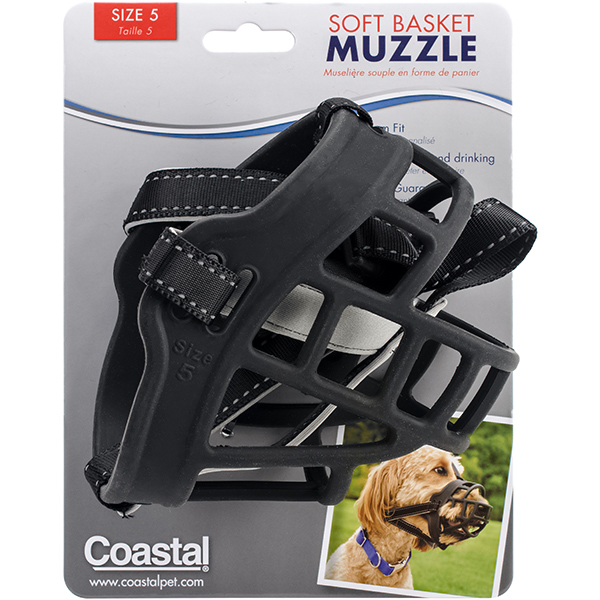
For walks and travel a basket muzzle is the best choice: your dog can open its mouth freely, pant, drink and take treats. Close-fitting nylon "sleeve" muzzles are only for short procedures — a vet visit, nail trimming or grooming. Choose the size by the length and circumference of the snout and the neck circumference behind the ears, and introduce the muzzle gradually with treats, never using it as punishment.
When a dog needs a muzzle
- on public transport and in crowded places — rules usually require it for medium and large dogs;
- for potentially dangerous breeds — always in public places;
- in a shelter during an air raid alert, with many people and other animals around;
- at the vet's or groomer's if the dog may bite out of pain or fear;
- for dogs that pick up everything from the ground.
Rules for walking and transporting dogs differ between cities and carriers — check them in advance.
Types of muzzles
| Type | Pros | When to use |
|---|---|---|
| Basket (silicone, plastic, metal) | The dog pants with an open mouth, drinks and takes treats | Walks, transport, shelters, longer wear |
| Nylon or fabric sleeve | Compact, light, easy to carry | Short procedures: vet, grooming, nail trimming |
| For flat-faced breeds | Shaped for a short snout, doesn't press on the nose | Pugs, French Bulldogs, Shih Tzus |
A comfortable option for walks is the soft silicone Coastal Soft Basket Muzzle. For short procedures with small dogs try the CROCI nylon muzzle for small breeds, and for Pugs and other flat-faced dogs the Trixie muzzle for brachycephalic breeds.
How to measure
- Snout length — from the tip of the nose to a point about 1 cm below the eyes.
- Snout circumference — around the widest part with the mouth closed. For a basket muzzle add 1–3 cm (less for small dogs, more for large ones) so your dog can open its mouth and pant.
- Neck circumference — right behind the ears, where the strap will go.
A well-fitting muzzle doesn't touch the eyes or press on the nose, and your dog can open its mouth and stick out its tongue. The strap behind the ears should be snug enough that the muzzle can't be pawed off, but you should still be able to slip a finger under it.
How to train your dog to wear a muzzle
- Show the muzzle and give a treat as soon as your dog looks at or sniffs it.
- Put a treat at the bottom of the basket and let your dog push its nose in. Repeat 5–10 times.
- When your dog happily puts its nose in, hold the muzzle on its face for a couple of seconds while feeding treats.
- Fasten the strap for a few seconds and take it off straight away. Gradually increase the time.
- Put the muzzle on before nice things happen: a walk, a game.
Train in short 2–3 minute sessions several times a day. Small soft treats from the dog treats section are handy for this. Most dogs get used to a muzzle within 1–2 weeks.
Caring for the muzzle and when to replace it
Wash the muzzle in warm soapy water once a week and after every walk in slush: saliva, mud and treat crumbs build up on it. Dry silicone and plastic baskets away from radiators; nylon muzzles can be hand-washed. Check the straps and buckles regularly: a worn strap can snap at the worst possible moment. A puppy will need a new muzzle as it grows — check the fit once a month.
What not to do
- use the muzzle as punishment — your dog will start to fear it;
- leave your dog in a tight nylon muzzle for a long time, especially in hot weather: it can't cool down by panting;
- put a muzzle on an unsupervised dog in a kennel or at home;
- use a muzzle that is too small and rubs the bridge of the nose.
Muzzles of different types and sizes are in the dog muzzles section. Nova Poshta delivery across Ukraine.
Frequently Asked Questions
Can I walk my dog in a nylon muzzle?
Briefly, yes, but it isn't suitable for walks: the dog can't open its mouth to cool down. Choose a basket muzzle for walks.
How long can a dog wear a basket muzzle?
A well-fitting basket lets your dog pant and drink, so it can be worn for a normal walk. Take breaks and never leave your dog muzzled unsupervised.
Does a small dog need a muzzle on public transport?
Small dogs usually travel in a carrier, in which case a muzzle isn't needed. Rules depend on the carrier — check in advance.
How do I know the muzzle is too small?
Your dog can't open its mouth, the basket touches the nose or eyes, or marks are left on the bridge of the nose. You need a bigger size.



