
Taking out a bag of litter every day is a hassle, so many owners would rather flush the clumps. That's possible, but only with litters that break down in water, and only a little at a time. Clay and silica litters must never be flushed: they swell or don't dissolve and reliably clog pipes. Below is a quick table and details on each type.
Which litters can be flushed
| Type | Flushable? | Why |
|---|---|---|
| Soy (tofu) | Yes, in small portions | Plant fibres soak and break apart |
| Wood pellets | Yes, if the pack says so | Pressed sawdust falls apart in water |
| Corn, paper | Only if the maker allows it | Depends on the specific formula |
| Bentonite (clay) | No | Clay swells and sets in pipes |
| Silica gel | No | Crystals don't dissolve in water |
The main guide is the label. If the maker doesn't say the litter is flushable, put it in the bin.
Soy tofu litter
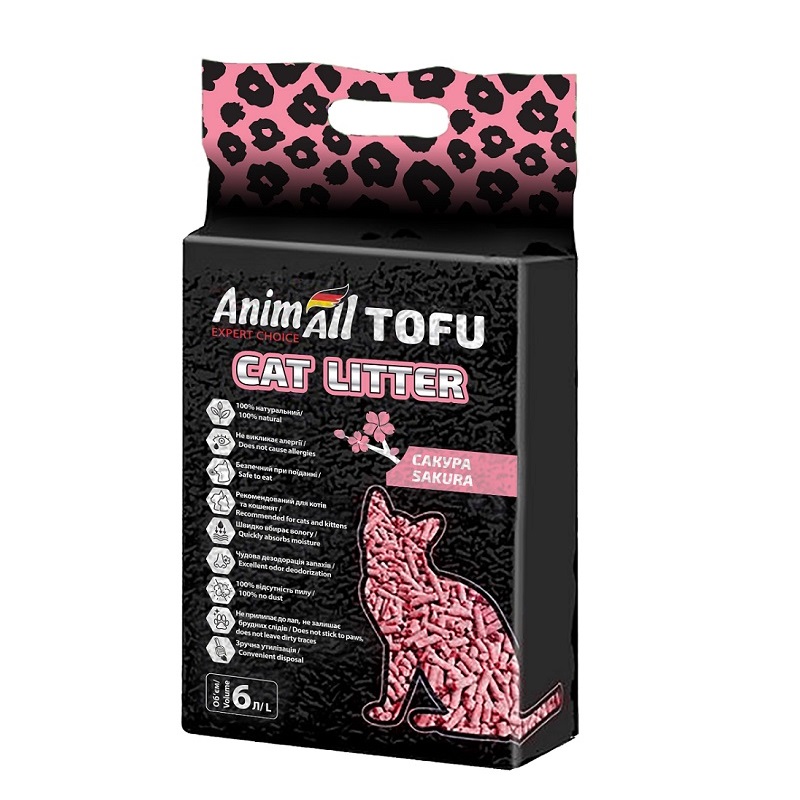
Tofu litter is made from soy fibres, so it softens quickly in water. It's light, almost dust-free and clumps, so it's easy to flush just the clumps rather than the whole tray. Examples are CROCI Tofu Clean and KOTIX Tofu Green Tea: their makers explicitly allow flushing in small portions.
Wood litter
Wood pellets are pressed sawdust. When wet they fall apart into sawdust and can also be flushed if the maker allows it, for example AnimAll Lavender. But wood litter usually doesn't clump, and wet sawdust builds up in the tray. Don't flush the whole tray at once — do it a handful at a time.
Clay and silica — bin only
Clumping bentonite is clay. In water it swells into a dense mass that settles in the toilet trap and pipes. A bentonite blockage can be very hard to clear even with a plumber's snake. Silica gel is made of crystals that absorb moisture but don't dissolve, so they also accumulate in the sewer. Put both types in the bin in a sturdy bag. More on the benefits of silica is in silica gel litter.
How to flush correctly
- Flush only clumps or a handful of used litter, never the whole tray.
- One portion per flush; for a larger amount, flush 2–3 times.
- Don't flush bags, wipes or clumps of fur with the litter.
- If your building has old, narrow pipes or the toilet has clogged before, don't risk it — use the bin.
- If you have a septic tank or a local treatment plant, check with its maker whether plant and pet waste is acceptable.
What else to consider
Even flushable litter shouldn't go down the drain in large amounts: the soaked mass gets heavy and can get stuck in a horizontal pipe. So it's easier to do the full litter change (every 1–2 weeks) into a bin bag and flush only the daily clumps. One more point: some countries advise against flushing cat waste because of the risk of parasites reaching waterways, so if your cat goes outdoors or is ill, it's better to bin the litter.
If you're still choosing a litter, start with how to choose cat litter, which compares all types by odour, dust and consumption. All options are in cat litter, and trays are in cat litter boxes.
How often to clean the tray
Remove clumps and solid waste every day, or twice a day with several cats: cats are fastidious and may refuse a dirty tray. Top up the litter as it's used, usually to a depth of 5–7 cm. Replace the litter completely every 1–2 weeks (silica less often, per the instructions), and wash the tray with warm water without harsh chlorine cleaners, as cats dislike strong chemical smells. If odour persists despite regular cleaning, try a different type of litter or a hooded tray with high sides.
Frequently Asked Questions
Can I flush clumping litter?
Only if it's plant-based (tofu, corn) and the maker allows it. Clumping bentonite must not be flushed.
Can I flush silica gel litter?
No, the crystals don't dissolve in water and clog pipes.
How much tofu litter can I flush at once?
A few clumps or a handful. Flush a larger amount in 2–3 goes or put it in the bin.
Can I flush wood litter?
Yes, if the pack says it's flushable — in small portions.
What if I have a septic tank?
Check with the septic tank maker; if unsure, put the litter in the bin.

