
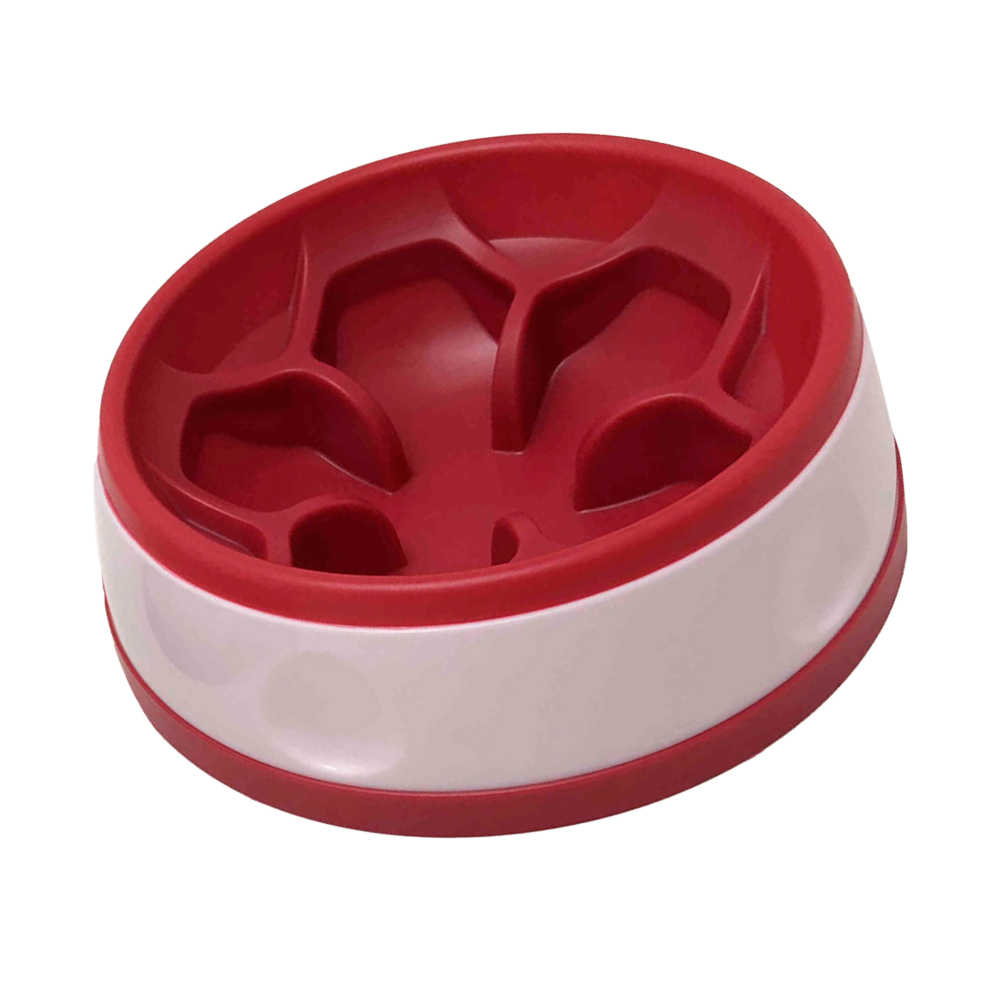
The most practical bowls are stainless steel and ceramic: they don't scratch, don't absorb smells and are easy to wash. Plastic bowls are light and cheap but get scratched over time, and bacteria live in the scratches. Cats prefer wide, shallow bowls; dogs need stable bowls that fit their muzzle and portion size. If your dog or cat gulps its food, slow-feeder bowls and lick mats help. Wash food bowls after every meal and change the water daily.
Materials: pros and cons
| Material | Pros | Cons |
|---|---|---|
| Stainless steel | Hygienic, unbreakable, lasts for years | Light — needs a non-slip base |
| Ceramic | Heavy and stable, attractive, easy to wash | Can break; throw it away if chipped or cracked |
| Plastic | Light, cheap, many shapes and colours | Scratches, may absorb smells; linked to chin acne in some cats |
| Silicone | Folds flat — handy for travel | Not for everyday use at home |
| Thermoplastic rubber (TPR) | Non-slip, quiet, used in slow-feeder bowls | The ridges need careful cleaning |
Bowls for cats
Many cats dislike deep, narrow bowls: their whiskers touch the sides, so they scoop food onto the floor with a paw or eat reluctantly. Choose wide, shallow bowls or saucers, such as the flat Trixie ceramic bowl, or ergonomic models like the Moderna Sensibowl. Place water separately from food: cats drink more readily from a bowl set away from their food. Many cats like drinking from a wide bowl or a fountain.
Bowls for dogs
- Size — the food portion should fill roughly half the bowl so kibble doesn't spill.
- Shape — long-eared dogs (spaniels, Basset Hounds) do well with narrow, tall bowls so their ears don't fall in the food. Flat-faced breeds need shallow bowls.
- Stability — a rubber ring or heavy base so the bowl doesn't slide across the floor.
- Stand — comfortable for large and senior dogs, but its benefit for bloat-prone breeds hasn't been proven — talk to your vet.
If your pet eats too fast
A dog that swallows its portion in thirty seconds gulps air, may bring food back up, and in large breeds fast eating is one of the risk factors for bloat. Slow-feeder bowls with ridges inside, such as the CROCI Slow Bowl, make your pet pick food out from between the ridges, stretching mealtime several times over. For wet food and pâté, lick mats like the AnimAll LickMat are great: licking calms and occupies your pet, and the mat sticks to tiles with a suction cup. These bowls also suit cats that eat too greedily.
How many bowls you need
- separate bowls for water and food; if you feed dry and wet food, a separate bowl for each;
- each pet should have its own food bowl — this makes portion control easier and avoids conflict;
- several water bowls in different places are a good idea, especially for cats;
- for walks and trips, a collapsible travel bowl — see the travel with dogs section.
How to care for bowls
- Wash wet-food bowls after every meal and dry-food bowls at least once a day.
- Change the water daily and wash the water bowl: a slimy layer of bacteria forms on the sides.
- Use hot water and an unscented detergent and rinse well. Steel and ceramic bowls can go in the dishwasher.
- Replace plastic bowls with deep scratches and chipped ceramic ones.
Dog bowls, feeders, drinkers and stands are in the dog bowls, feeders and drinkers section, and cat bowls in cat dishes. Nova Poshta delivery across Ukraine.
Frequently Asked Questions
What is the best bowl for a cat?
A wide, shallow ceramic or stainless steel bowl. Place water separately from food.
Does my dog need a raised bowl?
It's comfortable for large and senior dogs, but for breeds prone to bloat, discuss a stand with your vet.
Do slow-feeder bowls really help?
Yes, they stretch mealtime several times over and reduce air-gulping and regurgitation in dogs and cats that eat greedily.
Is a plastic bowl okay?
Yes, if it's made of good-quality plastic and has no scratches. Once deep scratches appear, replace it.



