Kittens bite and scratch because they're learning to hunt and play: in nature, their littermates and mother would teach them. To stop it, never play with a kitten using your hands or feet — only with toys at a distance (wand teasers, balls, kicker toys). If the kitten bites, stop the game: freeze, remove your hand and walk away. Play 2–3 times a day for 10–15 minutes so it burns off energy, and give it an allowed place for its claws — a scratching post. Punishment and shouting make a kitten fearful or aggressive.
Why kittens bite
- Hunting instinct. Stalking, ambushing and pouncing on a moving target is a kitten's main game, and the owner's feet make perfect prey.
- Taken from mum too early. Kittens separated from their mother before 10–12 weeks have less idea how hard they can bite.
- Playing with hands. If people played with the kitten using their fingers, it believes hands are toys.
- Excess energy and boredom — especially in a kitten that's alone all day.
- Teething at 3–6 months — the gums itch.
- Fear or pain. If the kitten bites when touched in a particular spot, see a vet.
How to stop a kitten biting: 7 rules
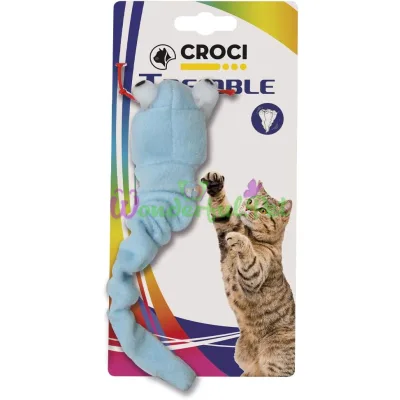
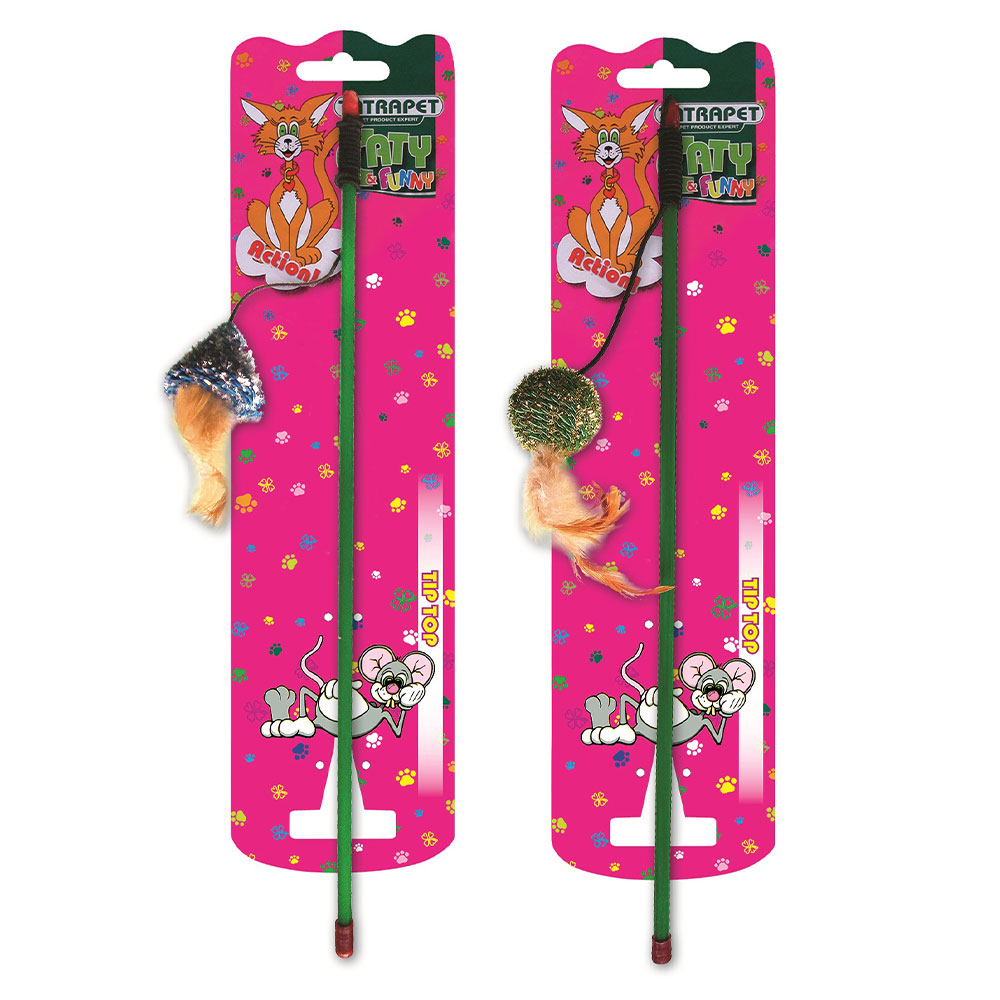
- Toys only, no hands. A wand teaser keeps your hand at a safe distance, for example the Caty Funny feather wand. For solo play, try the CROCI suction-cup teaser.
- Offer a toy it can bite and bunny-kick — plush or sisal, like the CROCI rattle snake or the sisal dumbbell.
- A bite ends the game. Freeze (a moving hand provokes more), calmly free your hand, turn away or leave for a minute.
- Regular play that follows the hunt: stalk, chase, pounce, catch — then a treat or a meal. This lets the kitten let off steam and calm down.
- Redirect. If the kitten is preparing to ambush your feet, throw a ball to one side.
- Scratching post. Put one near where it sleeps and in a walkway, and praise it for using it.
- Trim the claw tips so scratches hurt less. How to do it is in how to trim a cat's claws.
What not to do
- Hitting, flicking the nose or spraying water — the kitten becomes afraid of hands and bites harder out of fear.
- Shouting and jerking your hand away — it makes the prey even more exciting.
- Allowing biting because it doesn't hurt yet — an adult cat's bite is serious.
Ambushes on your feet
Attacks from around the corner mean the kitten isn't getting enough hunting. Add play sessions, especially in the evening when kittens are most active. Scatter toys, tunnels and balls around the home and set up a cat tree — the kitten gets its own hunting ground. Build a toy set from toys for kittens and cat toys, and find cat trees and posts in cat trees and scratching posts. More ideas in how to entertain a cat at home.
What about a second kitten?
Two kittens of about the same age play and wrestle with each other and teach each other the rules of bite strength. The owner gets bitten far less. If you can care for two, it's a good solution for a very active kitten that spends a lot of time alone.
When it passes
With the right kind of play, a kitten usually stops biting hands within a few weeks. Playfulness lasts until a year and beyond, but an adult cat that was taught to play with toys won't bite. If aggression gets worse, appears outside play or when touched, talk to your vet — pain may be the cause.
Frequently Asked Questions
Why does my kitten bite my feet?
Moving feet are prey. It's a sign of too little hunting play: add wand play and toys for solo hunting.
Can I spray my kitten with water when it bites?
Better not: the kitten links the unpleasant experience with you, not with its behaviour. Stopping the game works better.
Why does my kitten bite when I stroke it?
Many cats enjoy short strokes and get overstimulated by long ones. Watch the tail and ears and stop sooner.
At what age do kittens stop biting?
With the right training, within a few weeks; without it, the habit can stay into adulthood.