Small breed dogs (adult weight up to 10 kg) need food labelled "mini" or "small breed": more energy-dense per gram, with small kibble that is easy to crunch in a small mouth. Per kilogram of body weight a small dog needs more energy than a large one, but its stomach is small, so the daily portion is split into 2–3 meals, and toy breed puppies are fed 3–4 times a day. It is important to watch the weight — an extra 300–500 g on a Chihuahua is as noticeable as 5 kg on a Labrador — and to look after the teeth: small dogs build up tartar faster.
How small dogs differ from large ones
- Fast metabolism. Per kilogram of body weight a small dog burns more energy than a large one.
- Small stomach. A large portion is hard to eat at once, so the food should be nutrient-dense and meals frequent.
- Small mouth and teeth prone to tartar. Large kibble is awkward, and plaque appears earlier in small breeds.
- Risk of hypoglycaemia in toy breed puppies. Chihuahua, Toy Terrier and Yorkie puppies must not go long without food: lethargy and trembling call for an urgent vet visit.
- Picky eating. Many small dogs are fussy, and owners start feeding them from the table — hence the extra weight.
Which food to choose
| Criterion | What to look for on the pack |
|---|---|
| Breed size | Mini, Small breed |
| Age | Puppy / Junior up to 10–12 months, Adult, Senior from 8–10 years |
| Ingredients | Meat or fish first in the ingredient list |
| Special needs | Sensitive for delicate digestion, Light for dogs prone to weight gain |
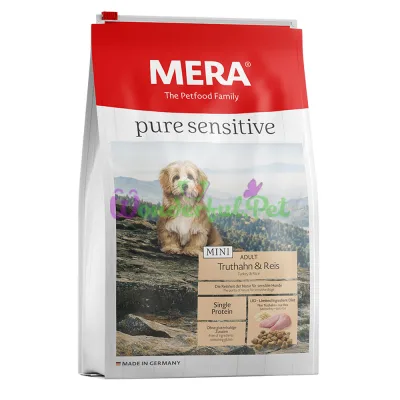
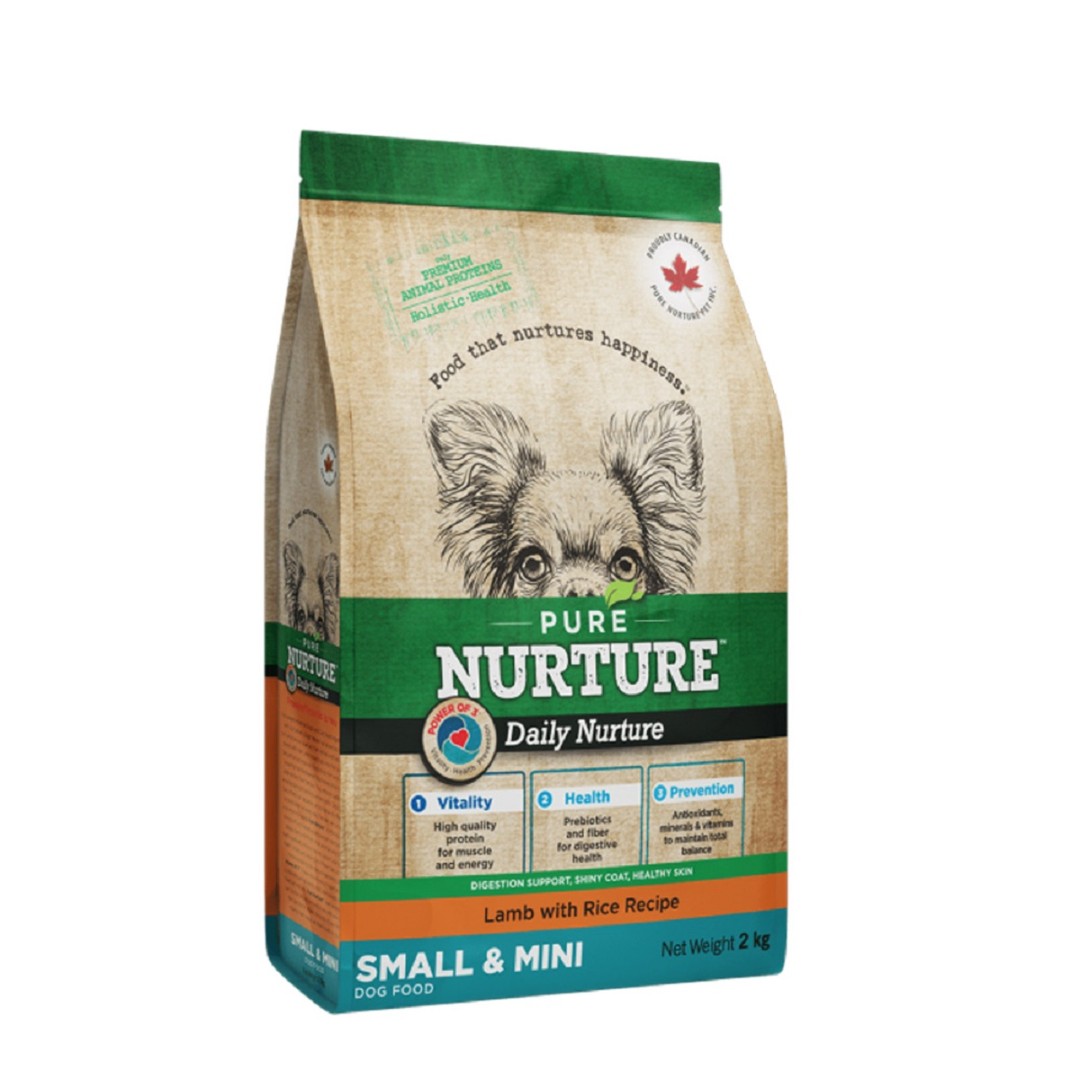
Good options include PURE NURTURE S-Mini Adult with lamb and rice for sensitive dogs, Grandorf Adult Mini with lamb and turkey, which is low in grain, and MERA pure sensitive Mini with turkey and rice. All diets for small dogs are in our small breed dog food selection.
Dry and wet food
Dry food is convenient, keeps well and makes portion control easier. Wet food is tastier, contains more water and suits fussy and senior dogs. A good option is a combination: dry food as the base and pouches or cans as a topper, for example Dolina Noteci Premium Mini with veal. When mixing, reduce the dry portion so the total calories don't go up. Wet diets are in the wet dog food section and dry ones in dry dog food.
How much and how often to feed
- Use the feeding table on the pack for your dog's weight as a starting point.
- Feed an adult small dog 2–3 times a day and toy breed puppies 3–4 times.
- Weigh portions on kitchen scales: for a small dog an extra 10–15 g a day means noticeable weight gain within a month.
- After 2–3 weeks check the body shape: the ribs should be easy to feel but not stick out, and the waist should be visible from above. Adjust the portion.
- Count treats in the daily allowance: they should provide no more than 10% of calories.
Notes on popular breeds
- Chihuahua and Toy Terrier — very small portions, easy to overfeed. Puppies are fed often and in small amounts.
- Yorkshire Terrier — often sensitive digestion and dental problems: Sensitive diets and dental care help.
- Spitz — a thick coat and a tendency to gain weight: omega-3 for the coat and strict portion control matter.
- Maltese and Shih Tzu — long coat and sensitive skin: diets with fish or lamb suit them well.
Small dogs' teeth
Small dogs' teeth sit close together, so plaque turns into tartar faster. Small dry kibble helps clean the teeth a little, but what matters most is regular brushing with a dog toothbrush and toothpaste and dental treats of the right size from the dog treats section.
Wonderful.pet stocks dry and wet food for small breed dogs from Grandorf, MERA, PURE NURTURE, Dolina Noteci and other brands, with Nova Poshta delivery across Ukraine.
Frequently Asked Questions
Can I feed a small dog medium breed food?
Yes, if your dog copes with the kibble and keeps a healthy weight, but small breed food is more convenient: the kibble is smaller and the energy density suits a small stomach.
How many times a day should I feed a Chihuahua?
Adults 2–3 times a day, puppies 3–4 times in small portions. Long gaps without food are harmful for toy breed puppies.
When should a small breed puppy switch to adult food?
Usually at 10–12 months, when growth is complete. Switch gradually by mixing the foods over 7–10 days.
Why does my small dog refuse its food?
Often because of table scraps and frequent food changes. If your dog is healthy, feed on a schedule and remove the bowl after 15–20 minutes. If it is lethargic, vomiting or losing weight, take it to the vet.