Large breed dogs (adult weight from 25 kg) do best on food labelled "large", "maxi" or "for large breeds": moderate in calories, with big kibble that encourages chewing and joint support ingredients — glucosamine, chondroitin and omega-3. Large breed puppies need a dedicated large breed puppy food with controlled energy and calcium: growing too fast harms bones and joints. Adult dogs are fed twice a day, kept lean and not allowed to run around vigorously right after eating — this lowers the risk of bloat.
How large dogs are different
- Joint load. A heavy body puts pressure on the hips and elbows, especially with age.
- Long growth period. Large breed puppies grow until 15–18 months, giant breeds until about 2 years, and growth should be steady.
- Slower metabolism per kilogram of body weight: large dogs gain excess weight more easily.
- Risk of bloat (gastric dilatation-volvulus) in deep-chested breeds (Great Dane, Shepherd, St Bernard, Dobermann) — a dangerous condition that needs urgent help.
Large breed puppies: don't rush the growth
Feed your puppy a large breed puppy food (Puppy Large / Maxi Junior). It balances energy, calcium and phosphorus so that bones and joints keep up with growth. Overfeeding and excess calcium increase the risk of dysplasia and other joint development problems. So:
- don't add calcium or vitamins to a complete puppy food unless your vet prescribes them;
- keep your puppy lean: the ribs should be easy to feel;
- until growth is complete, avoid long runs on asphalt and jumping down from heights.
Which food to choose for an adult dog
| What matters | Why |
|---|---|
| Large / Maxi label | Energy content and kibble are designed for a big dog |
| Large kibble | The dog chews instead of gulping: eats more slowly and feels full sooner |
| Glucosamine, chondroitin | Support for joint cartilage |
| Omega-3 (EPA, DHA) | Joints, skin, coat, heart |
| Moderate calories | Helps maintain weight |
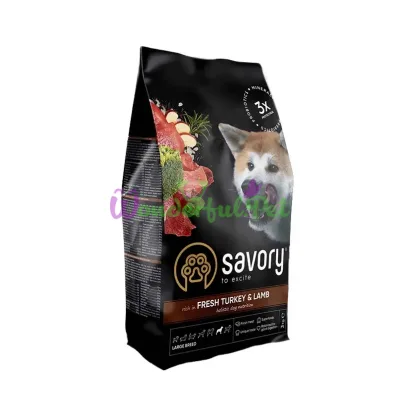
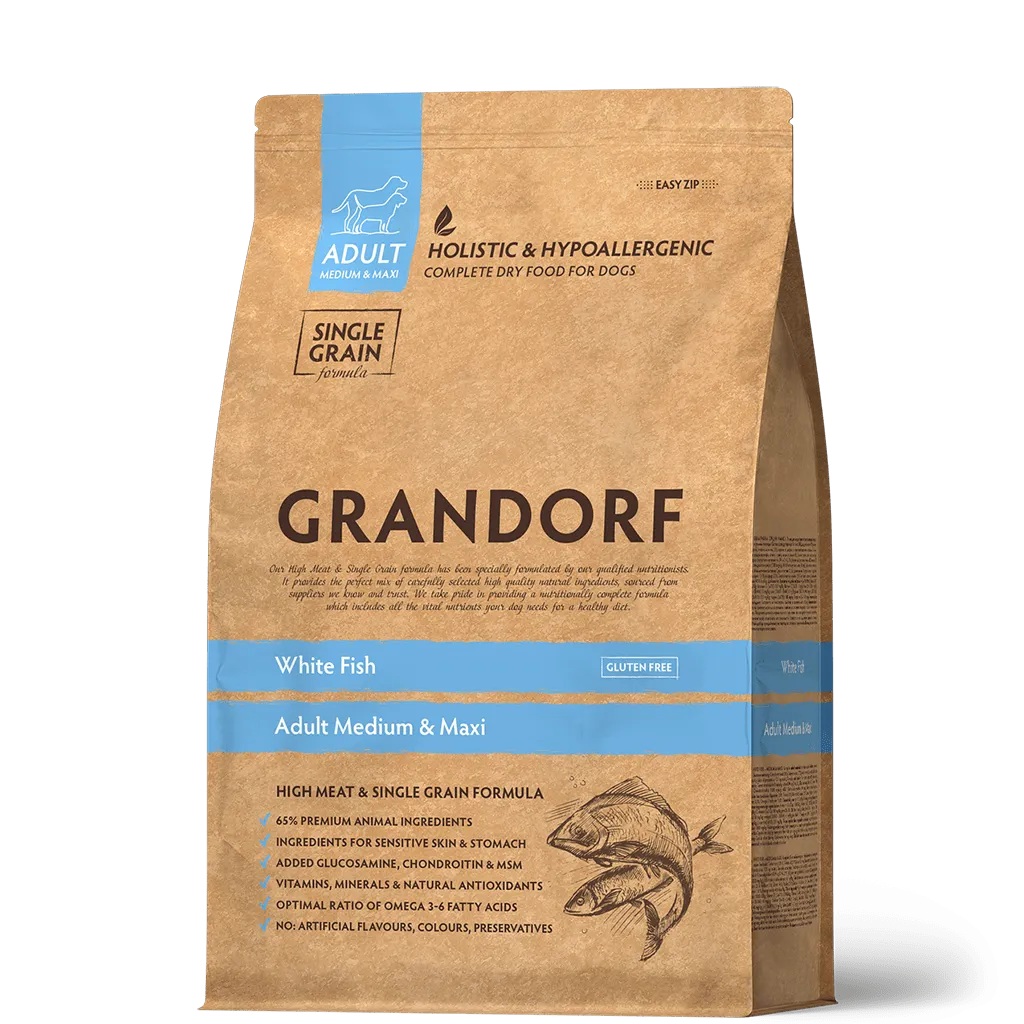
Suitable options include Grandorf Adult Medium & Maxi with white fish, which is low in grain, Savory Adult Large Breed with turkey and lamb and the single-protein Schesir Dog Large Adult with fish for dogs with sensitive digestion. All diets are in our large breed dog food selection and the dry dog food section.
How to feed to lower the risk of bloat
- Split the daily amount into 2 meals rather than one large one.
- Don't let your dog run and play hard for about an hour before meals and 1–2 hours after.
- If your dog gulps its food, use a slow-feeder bowl — you'll find them in the dog bowls, feeders and drinkers section.
- Don't give a lot of water right after a meal or intense exercise — offer it in small amounts.
- Know the signs: a swollen belly, unproductive retching, restlessness, drooling. These mean you should go to a vet clinic immediately.
Raised bowls are comfortable for large and senior dogs, but their benefit for bloat-prone breeds has not been proven — talk to your vet.
Joints: what helps besides food
- A healthy weight is the most important factor: every extra kilogram adds load on the joints.
- Regular moderate exercise — walks and swimming are better than rare but exhausting sessions.
- Joint supplements — for dogs over 6–7 years, working and very active dogs, on your vet's advice. For example, 8in1 Excel Glucosamine + MSM. Other supplements are in the vitamins and mineral supplements section.
- An orthopaedic bed reduces joint load during sleep.
How much to feed
Start with the amount in the feeding table for your dog's weight and check its body shape after 2–3 weeks. Active working dogs may need more, sedentary and neutered dogs less. Weigh your dog once a month: in large breeds an extra 3–5 kg is easy to miss until the dog starts tiring on walks.
Wonderful.pet stocks dry and wet food for large breed dogs from Grandorf, Savory, Schesir and other brands, joint supplements and slow-feeder bowls, with Nova Poshta delivery across Ukraine.
Frequently Asked Questions
When should a large breed puppy switch to adult food?
Usually at 12–18 months, closer to 2 years in giant breeds. Follow the food manufacturer's and your vet's recommendations.
Can I feed a large dog all-breed food?
Yes, if your dog keeps a healthy weight and feels well. But large breed foods have kibble and energy content better suited to big dogs, and joint support is already included.
How many times a day should I feed an adult large dog?
Twice a day. One big meal increases the load on the stomach and the risk of bloat in deep-chested breeds.
Does a young dog need joint supplements?
A healthy young dog on a good large breed food usually doesn't. They are recommended for senior and working dogs and for dogs with joint problems.