
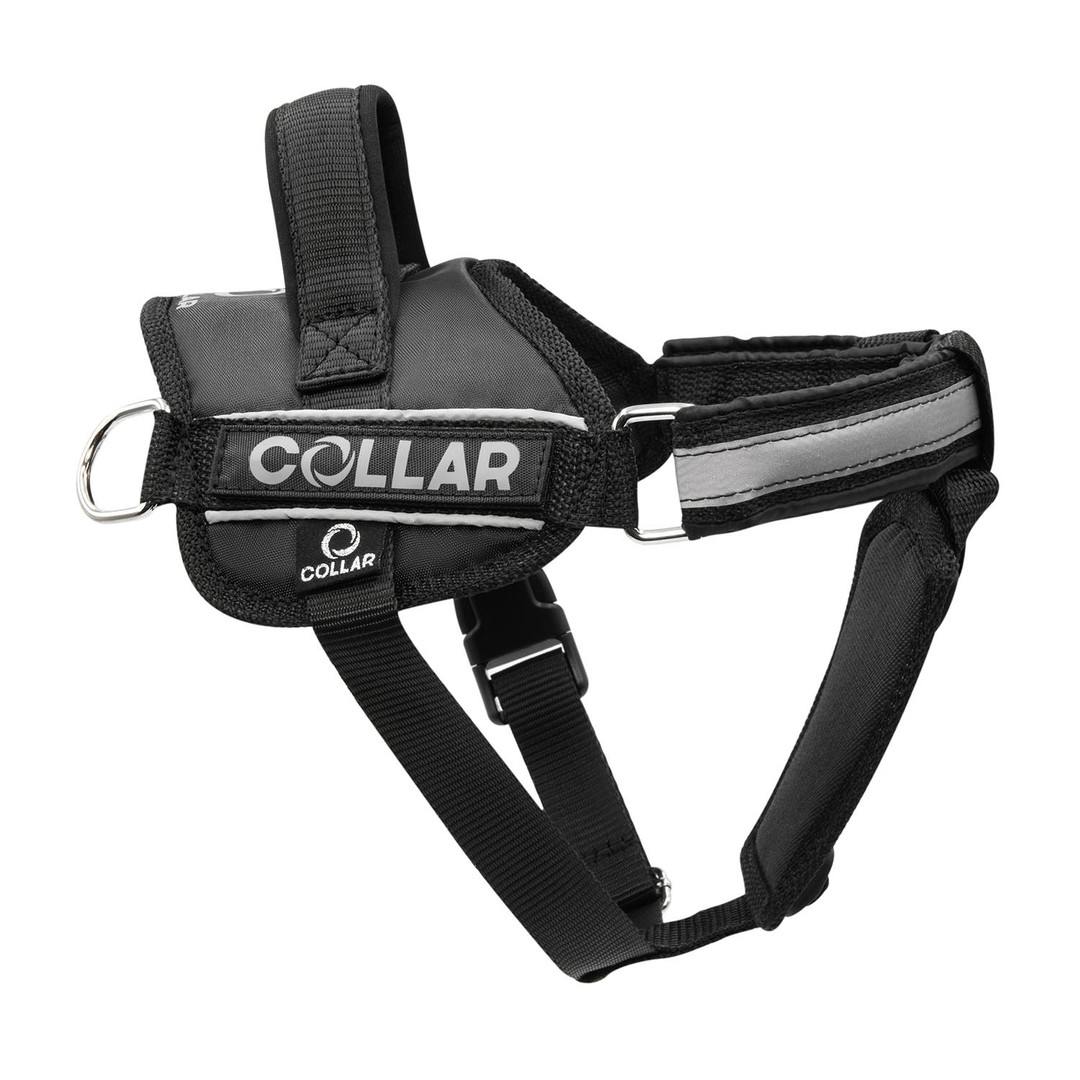
A harness spreads the load across the chest and shoulders rather than the neck, so it's often chosen for small breeds, puppies, flat-faced dogs (pugs, French bulldogs) and dogs that shouldn't have pressure on the windpipe. But a badly fitted harness rubs the armpits, restricts shoulder movement or slips, and the dog can back out of it. Here's how to choose the type, get the size right and put it on in a minute.
Types of harness
- Y-shaped (anatomical). Straps meet on the chest in a Y and leave the shoulders free, so the dog moves naturally. The most versatile option for walks.
- H-shaped (classic). Two loops, around the neck and chest, joined by straps on the back and chest. Easy to adjust.
- Vest harness. Soft with a wide contact area, comfortable for small dogs and puppies, and warm in cold weather.
- Figure-eight. A light two-loop model for small dogs and cats.
- Sport and pulling harnesses. For running, canicross and pulling, designed for a specific load.
If your dog pulls hard, look at harnesses with a front leash ring on the chest, which turn the dog towards you when it lunges. A wide choice is in dog harnesses.
How to measure
| Measurement | Where to measure |
|---|---|
| Chest girth | Around the widest part of the ribcage, just behind the front legs |
| Neck girth | At the base of the neck, where a collar sits |
| Weight | Needed for some models and for choosing a leash |
Measure your dog standing, with a soft tape and no tension. If the measurements fall between two sizes, choose the larger one with room to adjust for a puppy, and go by chest girth for an adult dog.
How to put a harness on, step by step
The order is almost the same for Y- and H-shaped harnesses:
- Undo the buckles and lay the harness out so the leash ring is on top, on the back.
- Slip the neck loop over the head (or wrap and buckle it on models with a neck clip).
- Pass the chest strap between the front legs so the panel sits in the middle of the chest.
- Bring the side straps round behind the front legs and click the buckles at the sides or on the back.
- Adjust the length so two fingers fit easily between strap and body.
Check the fit: straps don't dig into the armpits, the chest panel doesn't ride up to the throat, and a gentle forward pull doesn't slide the harness over the head.
Common mistakes
- Too loose — the dog backs out, especially puppies and slim breeds.
- Too tight — rubs the armpits and restricts breathing and movement.
- Strap across the shoulders — on "Norwegian" harnesses it can limit shoulder movement on long walks.
- Wearing it all day — take it off at home so the coat doesn't mat and the skin can rest.
Getting your dog used to a harness
Show the harness, let your dog sniff it and give a treat. Then lay it on the back, reward and remove it. Next, put it on for a minute at home, praise and distract with play. Gradually increase the time, and only then go for a walk. Puppies usually get used to it in a few days if you don't rush or force it. Handy rewards are covered in training treats for dogs.
Harness or collar
A collar is simpler and works for dogs that walk well on a leash and for carrying an ID tag. A harness is better for small breeds, puppies, flat-faced dogs, dogs with neck problems and for running. Many owners use both: a collar with an ID tag all the time and a harness for walks. A detailed comparison is in how to choose a harness or collar. Pair the harness with a comfortable leash, such as a retractable leash.
Frequently Asked Questions
How do I know the harness fits?
Two fingers fit under the straps, they don't dig into the armpits, and the harness doesn't slide over the head when pulled.
Which harness is best for a dog?
For walks most owners choose a Y-shaped harness, as it leaves the shoulders free.
Can a dog wear a harness all day?
It's better to take it off at home so it doesn't rub or mat the coat.
From what age can a puppy wear a harness?
From the first walks, with room to adjust and gradual introduction.
What if my dog slips out of the harness?
Tighten the straps or choose a model with an extra belly strap behind the ribcage.
Does a harness help if my dog pulls?
A front-clip harness reduces lunging, but pulling is fixed through training.

