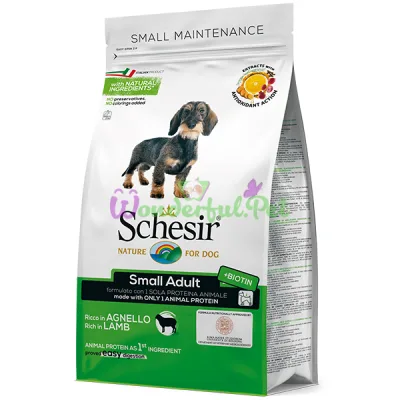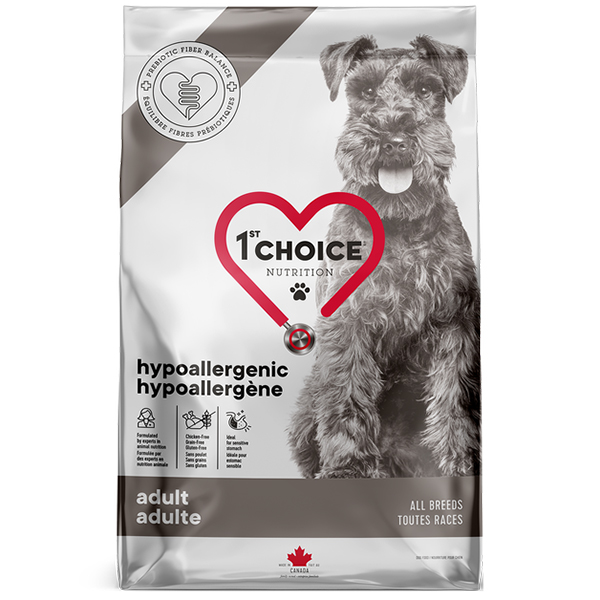
Feed a French Bulldog a complete premium or super-premium food for small and medium breeds, with kibble that's easy for a short muzzle: puppies 4 times a day until 4 months, 3 times until 6–8 months, then twice a day. The breed is prone to food allergies and gas, so many Frenchies do well on single-protein foods (lamb, duck, salmon) or hypoallergenic foods. Watch the weight closely: an adult Frenchie usually weighs 8–14 kg, and extra kilos worsen breathing, back and joint problems.
Breed traits that matter for diet
- Brachycephaly. The short muzzle makes small kibble hard to pick up, and Frenchies gulp air while eating — hence gas and burping.
- Allergies. Food allergies and atopic dermatitis are common: itching, red skin, inflamed ears and skin folds.
- Sensitive digestion — flatulence and soft stools when the food changes.
- Tendency to gain weight — dangerous for the back (the breed is prone to intervertebral disc problems) and breathing.
- Poor heat tolerance — don't feed right before a walk in hot weather or straight after exercise.
Which food to choose
Look for a food with a named animal protein listed first and no unnecessary flavourings or colourings. Medium, flat or pillow-shaped kibble is easier for a Frenchie to pick up than tiny balls. If your dog has reacted to chicken or beef, start with a single-protein food with a novel protein, such as 1st Choice Hypoallergenic with duck and sweet potato or Schesir Small Adult with lamb. See the hypoallergenic food collection and read more in hypoallergenic dog food. Food for dogs this size is in food for small dog breeds.
Feeding schedule
| Age | Meals a day | Food |
|---|---|---|
| 2–4 months | 4 | Puppy food for small and medium breeds |
| 4–8 months | 3 | Puppy food |
| 8–12 months | 2–3 | Switch to adult food from 10–12 months |
| Adult | 2 | Adult food; with allergies, single-protein or hypoallergenic |
If your bulldog has gas and burps
- Use a slow-feeder bowl such as the CROCI Slow Bowl: the dog eats more slowly and swallows less air.
- Split the daily amount into 2–3 meals rather than one big portion.
- Cut out table food, dairy, legumes and fatty food.
- If the gas doesn't go away, try a food with a different protein and ask your vet about probiotics.
If you suspect a food allergy
Signs: itchy paws and face, redness in the folds, recurring ear infections, soft stools. The only reliable way to identify the allergen is an elimination diet: for 8 weeks the dog eats a single novel protein or a hydrolysed food — and nothing else, not even table treats. If symptoms clear up, old foods are reintroduced one at a time. Do the diet under your vet's supervision; with severe allergy, the vet may prescribe a veterinary diet.
How to keep a Frenchie at a healthy weight
- Weigh the food — by eye it's almost always more than the recommended amount.
- Treats — up to 10% of calories; choose single-protein treats if there's an allergy.
- Walk 2–3 times a day at a calm pace and avoid heat. How to protect your dog from overheating is in dogs in hot weather.
- From above, a waist should be visible and the ribs easy to feel.
Care linked to feeding
After meals, wipe the facial folds with a damp wipe and dry them — food residue and moisture collect there and cause inflammation. Watch the teeth: in short-muzzled breeds the teeth are crowded and plaque builds up faster.
Treats for a Frenchie
Frenchies love treats and are masters at begging, so treats are a common cause of weight gain. Choose small pieces, single-protein or dried treats without additives, and use part of the daily food allowance as rewards on walks and during training.
Frequently Asked Questions
Can a French Bulldog eat a home-cooked diet?
Yes, if the diet is formulated with a vet and supplemented with vitamins and minerals. But with a tendency to allergies, a single-protein commercial food is easier to control.
How much food does an adult Frenchie need?
Usually 120–200 g of dry food a day depending on weight, activity and calorie content. Check the exact amount on the bag.
Why does my French Bulldog have gas?
Because of air swallowed while eating and sensitive digestion. A slow bowl, smaller meals and the right food help.
Which protein is best for an allergic bulldog?
One the dog hasn't eaten before: often lamb, duck, rabbit or salmon. It's best to agree on the choice with your vet.