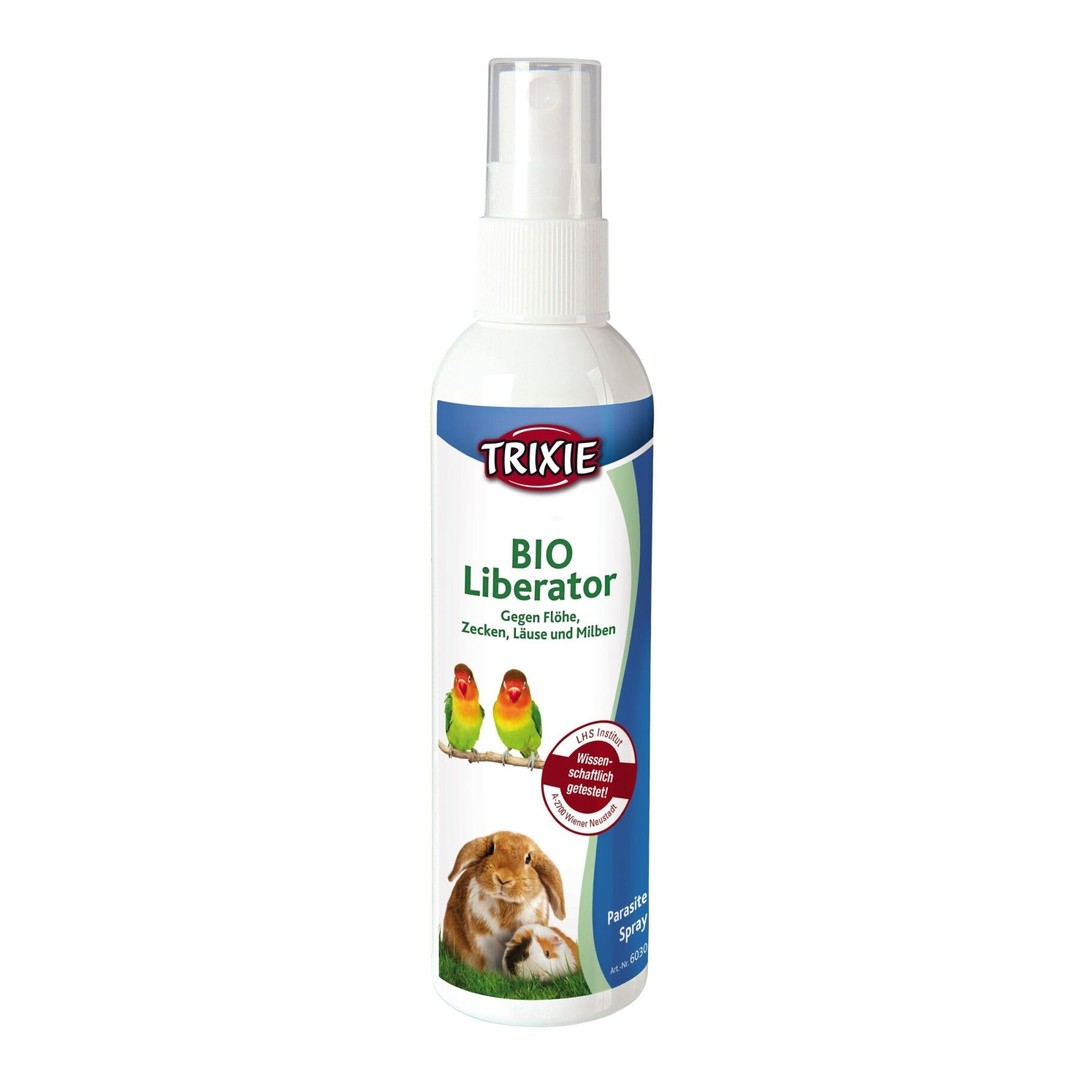
Trixie BIO Liberator, 100 ml is a spray for treating infested areas against external parasites: fleas, lice and ticks. According to the description, it is a natural formula for protecting birds and small animals, based on natural oils and their components with no added toxic substances. The active ingredient is geraniol at 1.5 g/l; the manufacturer says the plant-based actives are derived from coconut oil. The spray is used thoroughly on infested areas — floors, cages and soft resting places — and regular use helps prevent insects appearing. It is not intended for reptiles or terrariums.
How to use it
Remove feeders and bowls before treatment. Spray the places where the animal lives and rests thoroughly: the cage floor and bars, bed, bedding, floor and nearby cracks. Avoid getting the spray in the eyes. According to the manufacturer, the area is soon free of parasites after the first treatment, and regular treatments help prevent them coming back. Before returning the animal and its bowls, let the surfaces dry and air the room.
Key specifications
| Parameter | Value |
|---|---|
| Type | environmental spray |
| Against | fleas, lice, ticks |
| Active ingredient | geraniol, 1.5 g/l |
| Base | natural oils, plant substances |
| Where to use | floors, cages, beds, soft places |
| Restriction | not for reptiles or terrariums |
| Volume | 100 ml |
Pros
- Plant-based. No added toxic substances, according to the manufacturer.
- For the pet's surroundings. Cages, beds and floors.
- For birds and small animals. Where many chemical products are not allowed.
- Three types of parasites. Fleas, lice and ticks.
- Prevention. Regular treatment helps prevent insects.
- Active ingredient stated. With its concentration.
Cons and what to watch
- For areas only. It will not kill parasites on the animal itself — separate products are needed.
- Low concentration. Plant-based products are usually weaker than chemical insecticides.
- Inconsistencies in the card. The description mentions birds and small animals, while the options list cats and dogs.
- No treatment frequency. How often to repeat is not stated.
- Not for terrariums. Unsuitable for reptiles.
Why treat the surroundings
Only a small part of the flea population lives on the animal: eggs, larvae and pupae are in bedding, carpets and floor cracks. If you treat only the pet, it will keep getting reinfested. So alongside a product for the animal, it is important to treat its surroundings, wash beds and vacuum the home. Detailed plans are in fleas on a cat: how to get rid of them and fleas and ticks in dogs: how to protect.
Birds and rodents
Birds and small rodents can have feather lice, mites and lice that hide in cage cracks, perches and houses. The spray helps treat the cage without harsh chemicals. Move your pet to a carrier during treatment and return it once the cage has dried and been aired. Bird care is covered in budgerigar: food and care, and rodent care in hamster: keeping and feeding.
Caution with cats
Cats are sensitive to essential oils. If you treat a cat's bed, let it dry completely and air the room before your cat lies on it again. Do not spray the product on the cat itself.
How often to treat
The manufacturer gives no frequency, but with an infestation, areas are usually treated again after a few days to catch insects that hatch from eggs after the first treatment. For prevention, it is enough to treat the cage and bed during a thorough clean, for example every one or two weeks in the warm season, when parasites are most active.
Storage
Keep the bottle closed, away from children, food and feed. The best-before date is on the pack.
Who it suits
The spray suits owners of birds, rodents, cats and dogs for treating cages, beds and resting places against fleas, lice and ticks, as a complement to products for the pet itself. Other products are in the anti-parasite shampoos, sprays and powders and parasite treatments sections.
Verdict
Trixie BIO Liberator is a plant-based spray with 1.5 g/l geraniol for treating cages, beds and floors against fleas, lice and ticks, suitable for the surroundings of birds and small animals. The downsides are that it does not treat the pet itself, the plant active is at a low concentration, no treatment frequency is given and it is unsuitable for reptiles.
FAQ
What should be treated with the spray?
The animal's living areas: floors, cages, beds and soft places.
What is the active ingredient?
Geraniol, 1.5 g/l.
Can it be applied to the animal?
The card describes treating areas only.
Which parasites does it target?
Fleas, lice and ticks.
Is it suitable for a parrot cage?
Yes, it is claimed for protecting birds and small animals.
Can it be used in a terrarium?
No.
What volume is it?
100 ml.