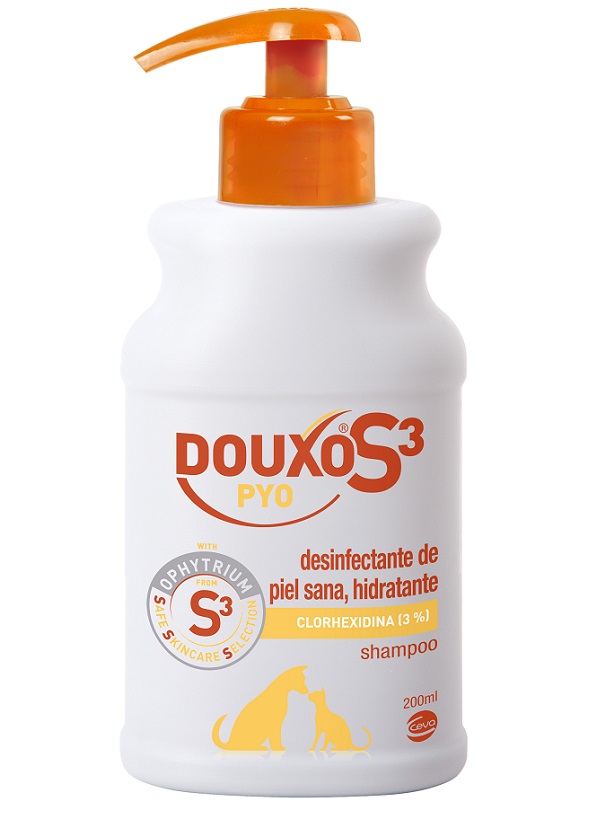
Ceva Douxo Pyo, 200 ml is an antibacterial and antifungal shampoo for dogs and cats from the French company Ceva. It combines the antiseptic chlorhexidine, the antifungal climbazole, phytosphingosine to restore the skin barrier and Lipacide C8G to normalise pH. The shampoo helps maintain the skin's protective barrier and microbial balance, and it deodorises with a gentle green tea scent. For external use only.
How the ingredients work
Chlorhexidine digluconate (3%) is an antiseptic with antibacterial and antifungal properties. Climbazole (0.5%) is an effective antifungal. Phytosphingosine (0.05%) is a pro-ceramide and a natural component of skin lipids: it strengthens the skin barrier, soothes and moisturises, and supports microbial balance. Lipacide C8G (2.5%) penetrates the deeper skin layers, normalises pH and restores skin metabolism. Together they not only fight microbes but also help the skin recover.
Key specs
| Parameter | Value |
|---|---|
| For | dogs and cats |
| Action | antibacterial, antifungal, deodorising |
| Chlorhexidine | 3% |
| Climbazole | 0.5% |
| Phytosphingosine / Lipacide C8G | 0.05% / 2.5% |
| Lather contact time | 5–10 minutes |
| Course | 2–3 times a week for 3–4 weeks |
| Volume | 200 ml |
Pros
- Dual action. Fights bacteria and fungi at once.
- High chlorhexidine concentration. 3% is medicated-shampoo strength.
- Restores the skin. Phytosphingosine strengthens the skin barrier.
- Deodorises. Removes unpleasant skin odour.
- A clear routine. Defined contact time and course length.
- For dogs and cats. One shampoo for both.
Cons
- You need to wait 5–10 minutes. Not easy with restless animals.
- Only part of a treatment. Deep infections need vet-prescribed medication.
- Not for everyday care. It's a course treatment, not a regular shampoo.
- A small bottle. 200 ml goes quickly on a large dog.
How to use
Wet the coat thoroughly with warm water. Apply the shampoo and massage it in so the lather reaches the skin. Leave the lather on for 5–10 minutes — that's how long the active ingredients need to work. Then rinse thoroughly under running water. Use 2–3 times a week for 3–4 weeks. Don't use on animals sensitive to any of the ingredients. Avoid the eyes, ears and mouth. Tips on keeping a cat still for the contact time are in how to bathe a cat, and general bathing rules in dog shampoo: how to choose and how to bathe.
When you need a vet
Bacterial skin infection (pyoderma) and fungal lesions are almost always secondary: they're preceded by allergies, parasites, hormonal disorders or injuries. The shampoo removes microbes from the surface, but without finding the cause the problem will return. A vet may also prescribe anti-itch medication or antibiotics; for small areas, ointments such as Unisan with chlorhexidine and zinc are used. For gentle care after the course, shampoos from the same range work well — Douxo S3 Care and Douxo S3 Calm.
Tips for the course
Before bathing, brush the coat and remove any mats so the lather can reach the skin. For long-haired dogs, a short clip for the duration of the course can make things easier. To manage the 5–10 minutes, set a timer and keep your pet distracted with treats or a massage. Dry the coat thoroughly afterwards: damp skin is a good environment for fungi. Wash your pet's towels and bedding more often during the course to prevent reinfection.
Who it suits
Dogs and cats with bacterial or fungal skin lesions, pustules, crusts and unpleasant odour — on a vet's recommendation. More products are in the medicated cosmetics section.
Verdict
Ceva Douxo Pyo is a strong medicated shampoo: 3% chlorhexidine and climbazole fight bacteria and fungi, while phytosphingosine and Lipacide C8G help the skin recover. It works as a course with the correct 5–10 minute contact time. The downsides are that bathing takes patience and it doesn't replace treating the underlying cause with a vet.
FAQ
How long should the lather stay on?
5–10 minutes, then rinse thoroughly.
How often should I bathe my pet?
2–3 times a week for 3–4 weeks.
Can I use it on cats?
Yes, it's for dogs and cats.
What are the active ingredients?
Chlorhexidine 3%, climbazole 0.5%, phytosphingosine 0.05% and Lipacide C8G 2.5%.
Can it be used long term?
It's a course treatment; gentle shampoos are better for everyday care.
Are there contraindications?
Don't use it on animals sensitive to any of the ingredients.
Does the shampoo replace antibiotics?
No, deep infections must be treated as prescribed by a vet.