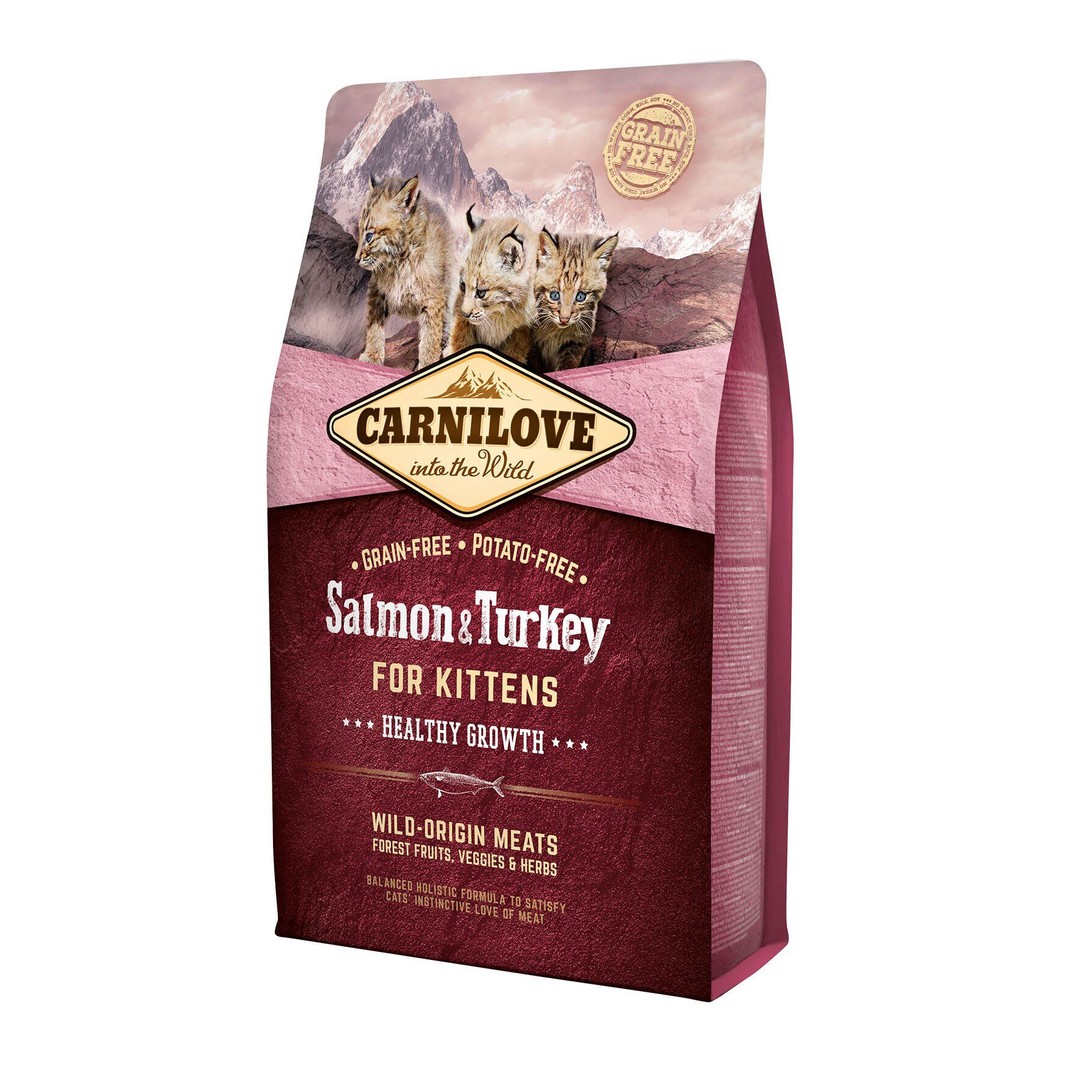
Carnilove Cat Salmon & Turkey Kitten, 2 kg is a grain-free dry food for kittens made with salmon and turkey. Like the whole Carnilove range, it contains no grain and no potato. The list starts with salmon meal (25%) and turkey meal (24%), followed by hydrolysed chicken protein (9%) and chicken liver (3%). Its energy value is 4150 kcal/kg, so it is richer than the brand's adult formulas. Omega-3 fatty acids are at 0.60% and omega-6 at 2.70%: this matters for kittens, because fatty acids are involved in the development of the brain, eyesight and skin.
Ingredients
The full ingredient list from the card: salmon meal (25%), turkey meal (24%), yellow peas (18%), chicken fat preserved with tocopherols (11%), hydrolysed chicken protein (9%), chicken liver (3%), salmon oil (3%), tapioca starch (2%), apples, carrots, flaxseed and chickpeas (1% each). Small amounts of hydrolysed crustacean shells (a glucosamine source), cartilage extract (a chondroitin source), brewer's yeast and chicory root (prebiotics), Yucca schidigera extract, seaweed, plantain, thyme, rosemary, oregano, cranberries, blueberries and raspberries are added.
Key specifications
| Parameter | Value |
|---|---|
| Type | dry food, holistic class |
| For | kittens |
| Flavour | salmon and turkey |
| Animal ingredients | salmon meal 25%, turkey meal 24%, chicken protein 9%, chicken liver 3% |
| Grain and potato | none |
| Energy value | 4150 kcal/kg |
| Omega-3 / omega-6 | 0.60% / 2.70% |
| Pack size | 2 kg |
Pros
- Lots of animal protein. Salmon, turkey, chicken protein and liver make up 61% by the stated shares.
- High energy. At 4150 kcal/kg a kitten needs only a small portion.
- Omega-3 from salmon. 0.60% plus 3% salmon oil.
- No grain or potato.
- Prebiotics. Yeast and chicory for a kitten's gut.
- 2 kg bag. Lasts one kitten several weeks.
Cons and what to watch
- No protein or fat analysis. The card gives only calories and omegas — check the pack for exact figures.
- No age range. The card does not say from what age and until when to feed it.
- Contains chicken. Chicken protein, fat and liver are not for kittens allergic to chicken.
- Peas in third place. Part of the protein is plant-based.
Why kittens need their own food
A kitten grows very fast and needs more protein, energy, calcium and fatty acids per kilogram of body weight than an adult cat. Its stomach is small, so the food must be concentrated. Adult food will not provide everything needed for growth, while kitten food given to an adult cat risks weight gain. Feeding by age is covered in detail in what to feed a kitten.
Hydrolysed chicken protein
Hydrolysed protein is protein broken down into shorter fragments. It is easier to digest, which is why it is often added to foods for young animals. Note that hydrolysis in a regular food does not make it hypoallergenic: if your kitten is allergic to chicken, it is better not to choose this food. Fish and turkey are the main protein sources here; chicken is a secondary one.
How to switch your kitten
Introduce the new food gradually over 7–10 days, mixing it with the old one and increasing the share every two or three days. Be especially careful if the kitten has just moved in with you: the stress of moving combined with new food often causes loose stools. If the kitten ate a different food at the breeder's, keep giving it for the first few days. A step-by-step plan is in how to switch your pet to a new food.
How much and how to feed
Take the daily amount from the table on the pack: for kittens it is based on age and weight. Small kittens are fed often, so split the daily portion into several meals. Weigh your kitten once a week: steady weight gain is the main sign it is getting enough food. You can combine dry food with wet food from the same range, but then reduce the dry portion. A list of what a kitten needs in the first days is in a kitten at home: shopping list.
Water
A kitten on dry food must be able to drink freely, so fresh water in a stable bowl is needed at all times. Many kittens prefer a wide ceramic or metal bowl placed away from their food. If your kitten drinks little, you can replace part of the diet with wet food so it gets more fluid.
Storage
After opening, close the 2 kg bag tightly or put the food, still in its original bag, into a container with a lid. Keep it in a dry, cool place. Food rich in fish oil is especially sensitive to air and heat: oxidised fat loses its benefits and changes smell. More details in how to store dry food.
When to move to adult food
Kittens are usually moved to an adult diet at around one year, and large breeds later, but the card does not give an exact age for this food, so follow the pack and your vet's advice. For a large adult cat the brand offers, for example, Carnilove Cat Duck & Turkey Large Breed. Make the switch to adult food gradually as well.
Who it suits
The food suits kitten owners who want a grain-free, high-energy diet based on fish and turkey. It does not suit kittens allergic to chicken. Other options are in the dry kitten food section and in our holistic cat food collection.
Verdict
Carnilove Cat Salmon & Turkey Kitten is a grain-free, potato-free kitten food based on salmon and turkey, with 4150 kcal/kg, 0.60% omega-3, prebiotics and a natural preservative. The downsides are the missing protein and fat analysis and age range, and the chicken in it does not suit allergic kittens.
FAQ
Who is this food for?
Kittens.
What meat does it contain?
Salmon meal (25%), turkey meal (24%), hydrolysed chicken protein (9%) and chicken liver (3%).
Does it contain grain?
No, it is grain-free and potato-free.
How many calories?
4150 kcal/kg.
How much omega-3?
0.60%, and omega-6 is 2.70%.
Is it suitable for chicken allergy?
No, it contains chicken protein, fat and liver.
What pack size is it?
2 kg.