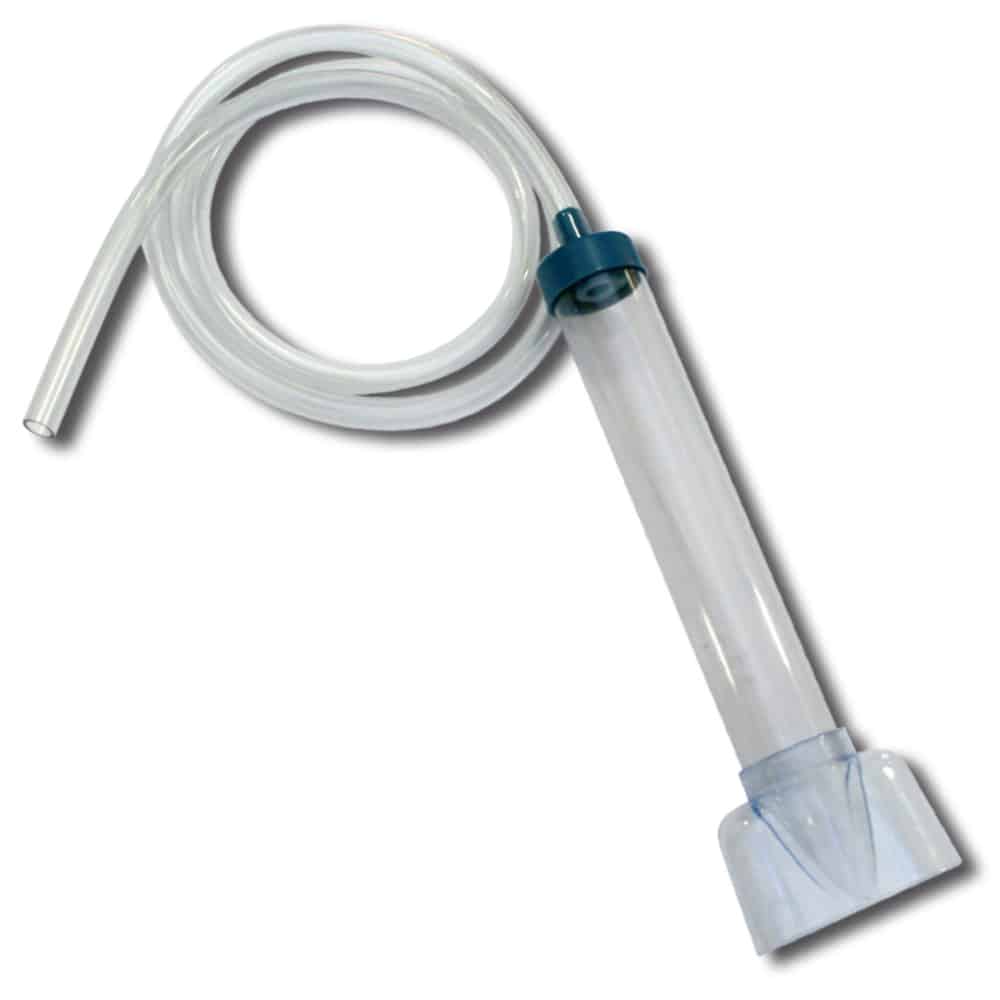
AMTRA Vacuum Cleaner L, 30 cm is a manual siphon for partial water changes and cleaning the bottom of freshwater and marine aquariums. According to the description, it is self-priming and removes dirt and debris while leaving the gravel clean. A special suction bell separates debris from gravel: the gravel tumbles inside the tube while dirt and water flow through the hose into a bucket. The size L intake tube is 30 cm long; the range also includes Small at 21 cm and Extra Large at 48 cm.
What the manufacturer claims
AMTRA promises easy cleaning without an electric "vacuum": the siphon starts itself, and the bell design keeps gravel out of the hose. One session combines substrate cleaning with a partial water change.
Key specifications
| Parameter | Value |
|---|---|
| Type | manual gravel siphon |
| Size | L |
| Tube length | 30 cm |
| Other sizes | S — 21 cm, XL — 48 cm |
| Aquariums | freshwater and marine |
| Start | self-priming |
| Hose length | not stated in the listing |
| Barcode | 8023222019287 |
Pros
- Self-priming. No need to suck water through by mouth.
- Two jobs at once. Gravel cleaning and a water change.
- Gravel stays in. The bell separates debris from substrate.
- Fresh and marine. Works in both.
- Three sizes. Choose one to match tank depth.
- No electricity. A simple, reliable design.
Cons and what to watch
- No hose length. Matters if the bucket is far away.
- No diameter. Unclear which gravel size it suits best.
- Title in another language. The listing title and description use different languages.
- "6 per pack" in the title. It looks like a wholesale case — check the quantity when ordering.
Choosing the size
The tube must reach the bottom while sticking out above the water so it is comfortable to hold. The 30 cm L size suits medium-depth aquariums — roughly 30–40 cm from the water surface to the substrate. For nano tanks the 21 cm Small is handier, and for deep tanks the 48 cm XL.
How to siphon
Put the bucket below the level of the tank. Lower the tube into the water and start the siphon — water will flow through the hose by gravity. Push the tube into the substrate and lift it: the gravel rises, dirt goes into the hose and the stones settle back. Work section by section. When the bucket has the volume you need, stop the flow by lifting the tube out of the water.
How much water to drain
Typically 20–30% of the water is changed once a week. Do not clean all the substrate at once: beneficial bacteria live in the gravel too, so many aquarists clean half the bottom in one session and the other half next time.
Fish, shrimp and plants
Small fish, fry and shrimp can be drawn into the tube — keep an eye on the siphon and do not bring it right up to them. Around the roots of live plants, do not push the tube in deeply, or you may uproot them; in those areas just collect debris from the surface.
After cleaning
Top up with fresh water at the same temperature, treated with a conditioner such as Tetra AquaSafe. Rinse the siphon with clean water and let it dry so the hose does not build up deposits.
If the water turns cloudy
After the first cleaning of heavily silted gravel, the water may cloud — the particles settle or are caught by the filter within a few hours. If the cloudiness persists, check the filter and consider a clarifier such as Tetra CrystalWater.
Who it suits
The siphon suits owners of medium-depth freshwater and marine aquariums with gravel or sand for routine cleaning and water changes. Other equipment is in fish equipment.
Verdict
The AMTRA Vacuum Cleaner L is a self-priming siphon with a 30 cm tube that cleans gravel and drains water in one session. The downsides are that the listing gives no hose length or diameter, and the title with "6 per pack" in another language confuses buyers.
FAQ
How long is the tube?
30 cm for size L.
What tank depth does it suit?
Roughly 30–40 cm from surface to substrate.
Do I need to suck water through by mouth?
No, the siphon is self-priming.
Is it suitable for a marine aquarium?
Yes, according to the description — fresh and marine.
How much water should I drain?
Usually 20–30% once a week.
Can it clean sand?
Yes, but carefully, without pushing the tube in deeply.
How many siphons are in the pack?
The title says "6 per pack" — it looks like a wholesale case; check the quantity when ordering.